How to Qualify a Lower Back Brace Supplier for EU and US Markets: 10 Questions B2B Buyers Should Ask
Why a B2B buyer should qualify the factory first
A quotation is only the beginning of a back-support purchase. For a distributor, the real cost can appear later: a delayed launch, a label that needs rework, a sample that differs from production, or a batch that cannot be traced after a complaint.
EU and US buyers review the factory before approving a lower back brace supplier. They want to know which documents belong to the model, how changes are recorded, and who handles quality questions.
This checklist is for importers, rehabilitation distributors, DME suppliers, wholesalers, hospital purchasing teams, and private-label brands comparing a lumbar support brace manufacturer.
1. Start with the exact model
Ask the lower back brace supplier to show the model number, product name, sizes, intended category, and applicable documents on the quotation. Ask the lumbar support brace manufacturer for the same model sheet. A general company catalogue is not enough to confirm the requirements for every SKU.
For EU projects, review the applicable requirements under Regulation (EU) 2017/745 and clarify the responsibilities of the relevant economic operators. For US projects, confirm the exact device, labeling, importer arrangement, and destination-market requirements. Do not treat a company-level certificate as automatic proof for every product.
Request the applicable conformity information, product specification, labeling draft, instructions, and quality-system evidence. The model name should match across the documents.
2. Look at the quality process behind ISO 13485
ISO 13485 matters, but the practical question is how the lumbar support brace manufacturer controls this model. Ask about incoming materials, production checks, nonconforming products, corrective action, and final release.
For a back support, review fabric, mesh, padding, support stays, back plate, fasteners, adjustment system, stitching, and packaging. The FDA QMSR became effective on February 2, 2026. US buyers should review working quality records, not only a certificate image.
3. Check traceability and change control
Ask how production dates or lots are identified, how a packaging version is recorded, and how a complaint can be connected with a shipment or production record. A dependable lower back brace supplier should also explain what happens when a material, component, label, or production location changes.
How are batches or production dates recorded?
How is the approved product version identified?
Can complaints be linked to production records?
Who approves revised labels or instructions?
Who is the quality contact during an investigation?
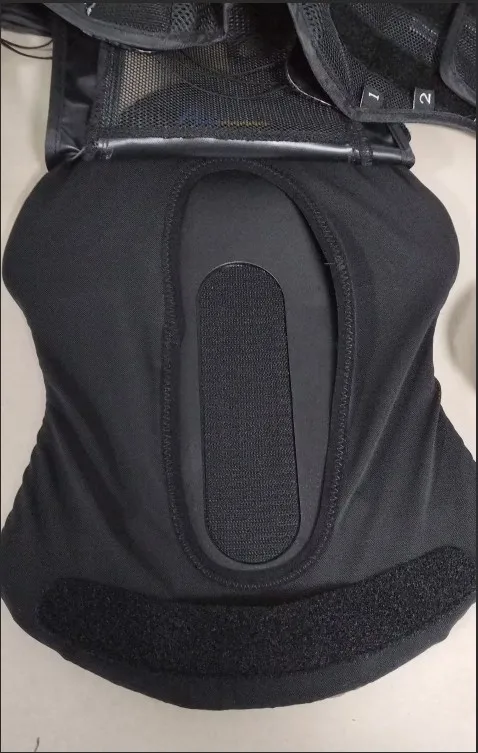 Rear support panel and padded lumbar contact area.
4. Do not group every back support under one name
A flexible lumbar belt, LSO brace, TLSO brace, and abdominal binder may appear related in a catalogue, but their structure and product positioning can differ. When evaluating an LSO back brace supplier, check the support-stay position, back-panel shape, coverage area, adjustment range, and size system. The LSO back brace supplier should show these details in the model sheet.
The product description, sample, packaging, and quotation should match. Ask the LSO back brace supplier to use the same terms in the quotation and label.
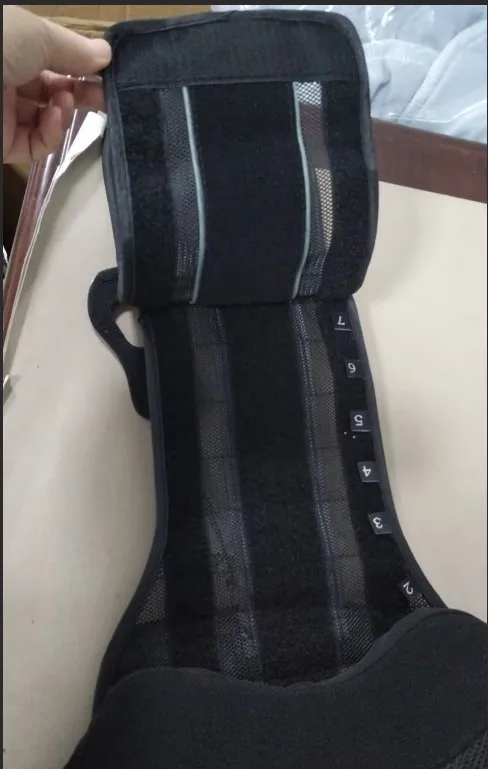 Internal support stays, breathable sections, and size markings.
5. Use the sample as the production reference
A sample is more than a photo prop. It should become the reference for the production order. Compare it with the model number, quotation, specification, size chart, packaging plan, and proposed listing.
For a back support belt with adjustable straps, check strap length, attachment points, fastening, support-panel position, stitching, and adjustment range. Confirm the back support belt with adjustable straps sample before repeat production. Record changes.
If a component becomes unavailable, ask how the proposed substitute will be reviewed. It should not be called equivalent without buyer communication.
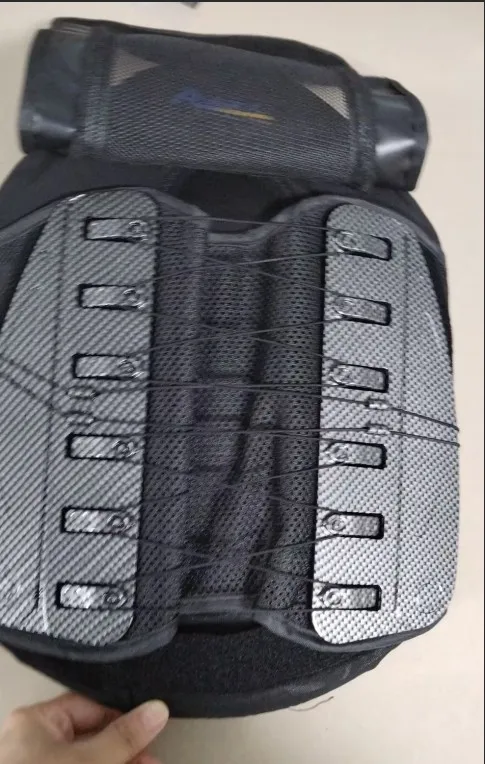 Open construction and multiple support stays.
6. Test the adjustment system several times
Large buyers need a product that can be described, inspected, packed, and reordered without surprises. Review the pulley or dual-pull system, cord, handles, fasteners, and panel configuration in the sample.
Open and close the support several times. Check whether the adjustment parts remain attached and whether the product returns to the same configuration. Keep product copy factual; do not add unsupported promises about pain relief or clinical performance.
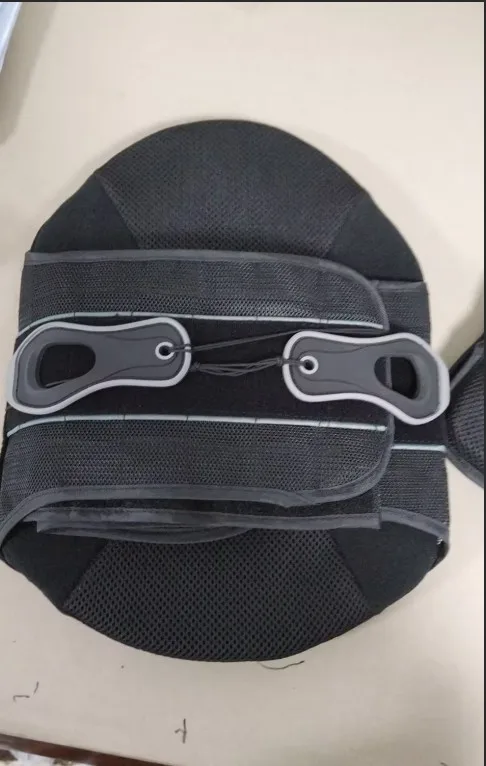 Dual-pull adjustment system for controlled tightening.
7. Treat private label as a control project
An OEM back brace manufacturer should explain how it manages artwork, packaging, instructions, carton markings, logo files, and approval records. Ask the OEM back brace manufacturer about label changes and document control.
Which product parts can be customized?
Which packaging formats are available?
Who approves final artwork?
How are revisions dated and recorded?
Do packaging changes affect the document set?
How are future changes communicated?
A capable OEM back brace manufacturer separates standard and custom options. Record the approved version with the OEM back brace manufacturer.
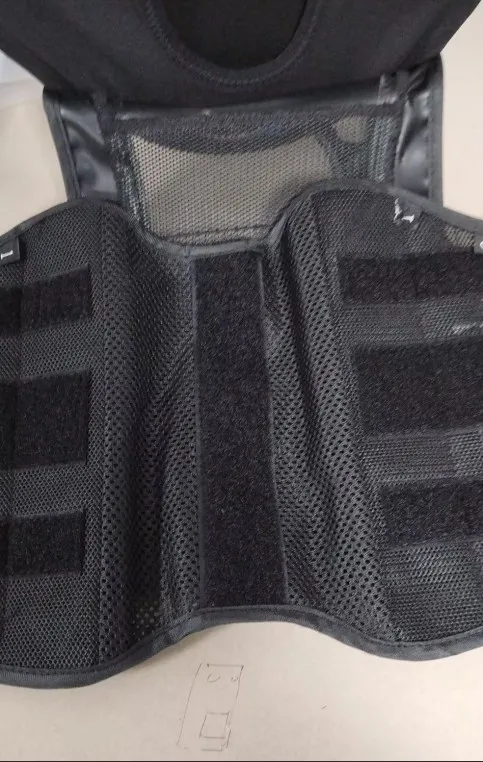 Breathable mesh, padding, and hook-and-loop fastening areas.
8. Match MOQ and lead time to the sales plan
MOQ should be considered with size range, packaging, capacity, and replenishment. Ask the lower back brace supplier to quote the exact model, sizes, logo requirement, packaging, quantity, and delivery terms.
Keep sample lead time, first-production lead time, and repeat-order lead time separate. Confirm the port, carton information, inspection arrangement, sample availability, and the process for urgent changes.
9. Agree on the response to quality issues
Before approving a lumbar support brace manufacturer, ask who handles complaints, returns, nonconforming products, and corrective actions. Ask the lumbar support brace manufacturer how it identifies the affected model or batch and communicates the result.
Write down the quality contact and escalation route. Total cost includes stockouts, rework, delayed launches, rejected packaging, and inconsistent samples—not only the unit price.
10. Request a complete procurement pack
Ask for the model number, specifications, sizes, sample policy, MOQ, lead time, packaging options, OEM scope, and applicable quality or compliance documents.
For an LSO back brace supplier, the pack should distinguish an LSO product from a flexible lumbar belt, abdominal binder, TLSO brace, or posture-support product. Ask the LSO back brace supplier to use the same terms in quotation and label.
Conclusion
The best lower back brace supplier for an EU or US programme is not automatically the cheapest one. It connects product design, quality control, traceability, documentation, OEM management, and replenishment.
Compare a lumbar support brace manufacturer, back support belt with adjustable straps, LSO back brace supplier, and OEM back brace manufacturer using the same model documents. Compare evidence, not assumptions.
Ready to review models? Visit our Back Support category, review the Lower Back Brace with Dual Adjustable Straps and Back Plate, or request a catalogue. Ask for the back support belt with adjustable straps sample. Confirm the back support belt with adjustable straps before ordering.
Buyer note
This article is a B2B sourcing guide and does not replace medical, legal, or regulatory advice. Confirm the exact model, intended purpose, labeling, documentation, importer responsibilities, and destination-market requirements with the relevant professionals.