How to Choose a Walker Boot Supplier: Tall vs Short Pneumatic Walking Boots
How to choose the right walker boot supplier
For a medical-device distributor, choosing the right walker boot supplier involves more than comparing unit prices. Product configuration, intended purpose, size range, packaging, documentation, sample consistency, and replenishment capability all affect the success of a walker boot program.
Two common options are the tall pneumatic walking boot and the short pneumatic walker boot. They may look similar in a catalogue, but they should not automatically be treated as interchangeable. This guide compares the two models from a B2B sourcing perspective for orthopedic distributors, rehabilitation wholesalers, importers, private-label buyers, and purchasing teams evaluating a pneumatic walking boot manufacturer.
Tall vs short walker boot: key purchasing differences
The main difference in a tall vs short walker boot comparison is shell height and coverage. The final product position should follow its stated purpose and destination-market requirements.
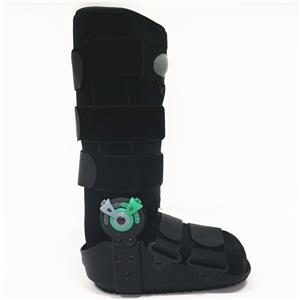
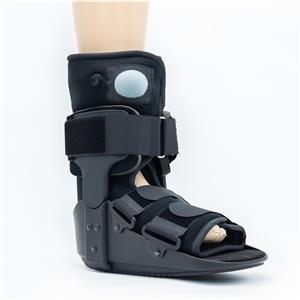
A tall walker boot generally covers more of the lower leg. A short walker boot has a lower profile and may suit programs focused on foot and ankle coverage or easier handling.
What to check in a pneumatic walking boot
When comparing products from a pneumatic walking boot manufacturer, review the complete configuration rather than the airbag alone. Ask the pneumatic walking boot manufacturer for model-specific details. The shell, support structure, liner, fasteners, sole, and size grading all matter.
1. Shell and support structure
Ask for the exact model reference and check whether the shell, side supports, and adjustment mechanism match the quotation. For a tall design, inspect shell height and side supports. For a short design, confirm the lower profile matches the approved specification.
2. Airbag or air-liner configuration
If the product is described as pneumatic, ask how the airbag or air-liner is configured and which parts are included in the quoted unit. Check the air valve, adjustment method, liner construction, and supplied instructions. A second review with the pneumatic walking boot manufacturer should confirm which parts are standard and which are customized.
3. Closures and fit adjustment
Open and close the Velcro straps or other closures during sample evaluation. Check strap length, stitching, attachment points, edge finishing, and consistency between samples. A clear size chart and consistent size grading can help reduce ordering errors and after-sales questions.
4. Sole and grounding
Review the sole structure, tread pattern, edge finishing, and contact with the ground. Do not rely on unsupported safety promises. Instead, record the visible sole design and ask how the supplier checks production consistency.
Tall vs short walker boot selection
Use this four-step process when reviewing a tall vs short walker boot range:
Define the product position: decide whether the listing is for a taller lower-leg and ankle-foot configuration or a shorter foot-and-ankle configuration.
Define the buyer and channel: hospital distributors, rehabilitation wholesalers, online medical-supply retailers, and private-label brands may need different packaging and documentation.
Compare samples: review shell, supports, liner, airbag, closures, sole, size chart, and instructions.
Confirm the commercial program: check MOQ, sample lead time, production lead time, cartons, inspection, and private-label options.
Do not select a model only because the product photograph looks more substantial. The model must fit the planned category and the supplier’s ability to deliver the same configuration repeatedly.
Fracture boot supplier questions
A distributor comparing a fracture boot supplier should request model-specific information before asking for a final quotation:
What is the exact model number and product name?
Which sizes are available, and how are they graded?
Is OEM or private-label packaging available?
What are the sample policy, MOQ, and production lead time?
What packaging and carton options are available?
How are model, batch, or lot details recorded where applicable?
What quality checks are completed before shipment?
How are design, packaging, or material changes communicated?
Which documents and instructions are supplied for the exact model?
A capable fracture boot supplier should answer these questions with product-specific information. A reliable fracture boot supplier should also provide a clear sample comparison before moving forward.
Walker boot sample approval checklist
Use the following checklist before approving a sample:
Confirm the model name and reference number.
Photograph the front, side, sole, liner, closure system, air valve, and packaging.
Compare available sizes with the size chart.
Check shell edges, supports, stitching, fasteners, and liner finishing.
Review the airbag or air-liner configuration.
Compare the sample with the proposed product description.
Approve packaging artwork and instructions separately.
Record every requested change in a dated sample-approval document.
OEM and private-label questions
An OEM walker boot manufacturer should explain what can be customized and what information is needed to begin. Depending on the project, customization may involve packaging, logo artwork, instruction layout, carton markings, or product configuration.
Ask the supplier to separate standard options from custom options. Confirm whether MOQ and lead time change for private-label products. Ask who approves artwork, how revisions are recorded, and whether packaging changes affect product documentation.
A reliable OEM walker boot manufacturer should also help the buyer choose a realistic first order. When comparing an OEM walker boot manufacturer, confirm artwork, sample, MOQ, and change-control procedures in writing before adding multiple sizes or packages.
Why supply capability matters after the first order
Product sourcing does not end when the first shipment is delivered. A distributor needs a supplier that can support replenishment, quality communication, packaging updates, and repeat sample review when a model changes.
Before selecting a walker boot supplier, ask about production capacity, lead time by order quantity, carton configuration, inspection support, and communication during peak periods. A good walker boot supplier should answer with model-specific information. Confirm these details in the quotation and purchase-order record.
Xiamen Huakang Orthopedic Co., Ltd. offers tall and short walker boot models, including pneumatic configurations, for international buyers. The product pages list OEM/ODM services, samples, sizes, and certification information. Request current model-specific documents and confirm destination-market requirements before placing products on the market.
Conclusion
The right walker boot is the model that matches the intended product position, buyer requirements, documentation, size range, sample configuration, and replenishment plan. A tall design and a short design should be compared as separate product programs.
Use the tall vs short walker boot comparison to create a shortlist. Then evaluate the shell, support structure, airbag or air-liner, closures, sole, packaging, MOQ, lead time, and OEM support. This gives your purchasing team a clear basis for comparing a walker boot supplier, a fracture boot supplier, and an OEM walker boot manufacturer.
Ready to compare walker boot models? View the tall pneumatic ROM walker boot, review the short walker fracture boot, or request samples and a product catalogue.
Buyer note
This article is a B2B sourcing guide and does not replace medical, legal, or regulatory advice. Product indications, documentation, labeling, and market-access requirements should be confirmed for the exact model and destination market with the relevant professionals.