How to Audit an Orthopedic Brace Factory Before Your First B2B Order
A sample is only the beginning
Buyers check a first sample’s finish, fit, stitching, support parts, and packaging. That still does not show whether the same product will be made correctly on a repeat order.
The useful question is what happens behind the sample: how materials, work instructions, failed labels, and damaged fasteners are controlled.
An orthopedic brace factory audit is a practical test of whether the supplier can repeat the approved product and support the order after shipment.
Begin with the model you may actually buy
Write down the exact model number, product name, size range, legal company name, and factory address. Match them against the quotation and quality documents. If a second site cuts, sews, or packs the goods, record it.
A trading company may manage communication while another company manufactures. That can work if responsibilities are clear: who receives materials, controls production, and releases finished goods.
If the answer keeps changing, ask for a written explanation. An unclear production address is a serious finding during an orthopedic brace factory audit.
Walk from incoming materials to the production line
Start with incoming materials. An established medical brace factory should know what arrived, when, and whether it was accepted. Fabric, mesh, foam, stays, labels, fasteners, and packaging should not be mixed with stock awaiting approval.
Choose one material and follow it back to a supplier record, then forward to the production order. This tells you more than a general statement about traceability.
Can the factory identify the material source?
Can it connect the material with one order?
Who approves a replacement?
A substitute should not enter the line simply because it looks similar. Record who reviewed it and whether it affects the approved specification.
Put the sample beside the operator’s instructions
Take the approved sample to the line and ask the operator to walk through the job: materials, support components, sewing sequence, adjustment parts, inspection points, and packing. The explanation should match the model in the buyer’s hand.
An orthopedic brace supplier checklist should compare the sample, specification, bill of materials, work instruction, and inspection standard. Reliance on memory increases variation when staff or materials change.
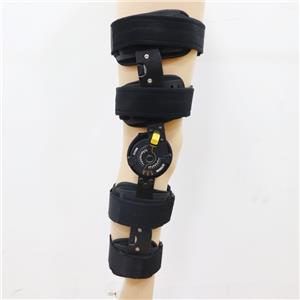
For a knee brace, check hinges, straps, padding, edge finishing, stitching, and size marks. For a back support or ankle brace, compare support elements and fastening with the approved version.
Look for checks before the finished-goods table
Final inspection matters, but it is late in the process. A misplaced stay, loose stitch, wrong panel, or incorrect label is cheaper to fix near the operation that caused it.
Ask the orthopedic brace manufacturer where checks occur during cutting, sewing, assembly, adjustment installation, and packing. Records may cover dimensions, straps, fasteners, hinges, support-stay position, appearance, and label accuracy.
Request a completed inspection record for a comparable product. A blank form shows the method; a completed record shows it is used.
If a result fails, follow the paper trail: hold, rework, repair, return, scrap, or release.
Pay attention when something goes wrong
No factory can promise that every material and sewing operation will be perfect. What matters is whether a problem is contained and learned from.
During the medical brace factory review, locate the system for nonconforming products. Ask how the team handles loose stitches, damaged fasteners, missing components, wrong labels, or failed material. Recurring problems should lead to corrective action.
An old problem with a clear disposition and follow-up record is useful evidence. It is easier to manage than a supplier that only says “we have no complaints.”
Test traceability with a completed order
Choose one finished order and ask the factory to locate its records: order number or date, materials, inspection results, packaging version, and shipment information. Internal codes are fine if the links are understandable.
This is better than asking whether the supplier “has traceability.” Include artwork and labels: how is the current file identified, and how is an old version blocked? That belongs in an orthopedic brace supplier checklist because an old label can cause a problem even when the brace is correct.
Private label needs document control
Printing a logo is the visible part of an OEM project. The harder part is keeping artwork, instructions, labels, carton markings, samples, and documents aligned.
An OEM orthopedic brace factory should explain how a buyer file is received, approved, dated, and released. Ask who signs the final artwork and blocks old versions. During an orthopedic brace factory audit, compare the private-label sample with the approved file: model name, size, symbols, instructions, carton quantity, and item reference.
Which parts are standard or customizable?
Who approves artwork and packaging?
How are revisions numbered?
Check capacity against your order, not a brochure
A monthly output number says little by itself. Capacity changes with the sizes, colours, models, and custom packages in one order, or when one operation becomes the bottleneck.
Ask the orthopedic brace manufacturer which line, shift, and process would handle the model. Keep sample, first-production, and repeat-order lead times separate. Discuss shortages, artwork changes, seasonal demand, and replenishment before delivery is affected.
Agree on the response after shipment
Before ordering, record the sales contact, quality contact, and escalation route. Then ask the medical brace factory how it investigates a defect, identifies affected production, finds the cause, and communicates corrective action.
A workable answer has an owner, time frame, evidence, and follow-up. For US programmes, review quality-system evidence against the FDA Quality Management System Regulation. For EU programmes, confirm the applicable documentation and supply-chain responsibilities.
Communication is part of the audit. A supplier that replies with model numbers, records, and responsible departments is easier to manage than one offering broad assurances. Put unanswered points in writing before approval.
Turn the visit into a sourcing decision
Do not finish with “the factory looks professional.” Sort findings into three groups:
Approval blocker: unclear model identity, uncontrolled materials, no dependable release process, or an unresolved safety concern.
Corrective action: incomplete records, weak change control, unclear subcontracting, or capacity that does not match the quotation.
Improvement: housekeeping or document-format issues that do not currently change the approved product.
Record the owner and closure evidence for each open item. Do not approve while an approval blocker remains open. This makes the orthopedic brace supplier checklist useful for procurement.
Keep the control plan for repeat orders
The review continues after the first shipment. Keep the reference sample, specification, packaging approval, and quality requirements together. Agree how changes, inspections, complaints, and replenishment will be reviewed.
An OEM orthopedic brace factory should maintain the approved version across repeat orders. A clear reference pack reduces disputes and speeds the next comparison.
Conclusion
An orthopedic brace factory audit should cover materials, production, inspection, records, traceability, private-label files, corrective action, and replenishment. A certificate or showroom visit cannot answer all of this.
Use the orthopedic brace supplier checklist when comparing an orthopedic brace manufacturer, medical brace factory, or OEM orthopedic brace factory. The decision is simple: can this factory repeat this product and support the order after launch?
Planning a sourcing project? Visit our Back Support category, review the Lower Back Brace with Dual Adjustable Straps and Back Plate, or request a catalogue.
Buyer note
This B2B sourcing guide does not replace medical, legal, or regulatory advice. Confirm the exact device, purpose, labeling, documentation, importer responsibilities, and destination-market requirements with relevant professionals.