Plantar Fasciitis Night Splints: Dorsal or Boot Style?
The first few steps out of bed can be the reason someone looks for a plantar fasciitis night splint. Then comes another question: a compact support across the front of the ankle, or a larger, boot-shaped device behind the calf?
The best choice is not necessarily the smallest or the most rigid. It needs to hold the prescribed position, stay in place and be manageable at bedtime. If the wearer keeps removing it because it interrupts sleep, the fit needs reviewing.
First-step pain is a clue, not a diagnosis
Morning pain is a recognised feature of plantar fasciitis, but heel pain has other causes. A clinician should establish the cause before recommending a device. A night splint limits the foot's downward-pointing position during rest and maintains the position selected in the care plan. It is not a treatment for every painful heel.
The 2023 Heel Pain – Plantar Fasciitis guideline recommends a 1- to 3-month programme of night splints for people with heel pain/plantar fasciitis who consistently have pain with their first morning step. This is a clinician-directed programme, not a universal wearing schedule. The guideline also addresses stretching and therapeutic exercise. [1]
This is older guidance, not a new 2026 trial. It does not rank dorsal above posterior designs or validate the Huakang models below. Recent patient education from CNY Foot Surgery & Podiatry Care also discusses comfort and appropriate selection; it is not comparative trial evidence. [2]
Different shell positions, different pressure points
A dorsal night splint supports the front of the lower leg and top of the foot. There is less shell behind the calf than in a posterior design. That may help when rear bulk is troublesome, but the instep and heel-retention straps still need attention. “Open” does not automatically mean comfortable.
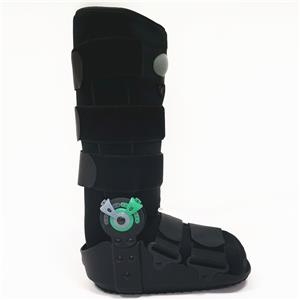
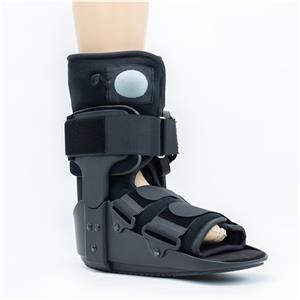
A posterior night splint, often called boot style, supports from behind the calf and beneath the foot. Its footplate and side straps retain the foot differently. Check heel seating, calf contact and how the shell rests against bedding.
For either format, size, padding and strap routing matter. More pull is not evidence of better treatment, and a larger shell is not automatically more suitable.
What to check before bedtime
Compare closure access and the prescribed resting position, not just how a sample looks on a table. Any wearer evaluation should follow professional advice and the product instructions.
Numbness, worsening pain, skin damage or colour changes are not signs of a useful stretch. Stop using the device and seek clinical advice; urgent or persistent circulation symptoms need urgent assessment. People with diabetes, poor circulation or reduced foot sensation need professional guidance before use. [2]
Also plan for getting out of bed. A night splint is not a walking boot. Tread or a walking claim on a sales page does not replace the model's instructions and professional advice about weight-bearing and safe removal.
NS006 and NS001: a real catalogue comparison
Huakang lists the NS006 dorsal model with heel straps and the NS001 posterior model with tread. The photographs and table below use supplier-published information checked on 6 November 2026, not independent performance testing. [3,4]
 NS006 on a demonstration leg: front support and heel straps. This is not an individual fitting prescription.
 NS001: posterior shell, footplate and side straps. Confirm the ordered colour and padding version.
The pages mention carton sizes but do not establish packing quantities for every size mix. Obtain a packing list before calculating freight. Certification words on a sales page also need supporting documents and a scope check.
The padding version belongs on the purchase order
For an importer, approving shell shape is only the start. Record the lining, padding thickness, seams, strap length, buckles and label version. If a different pad is proposed later, compare it with the approved sample rather than assuming it is a cosmetic change.
During sample review, check rough edges, exposed hook material near skin, strap slippage, loose attachments and unclear adjustments. Agree test methods and acceptance limits with the supplier. Do not turn “durable closure” into an invented test-cycle claim.
Huakang's pages list sampling and customisation options. Ask for the current model specification, quality records and after-sales terms; those service options do not prove a particular factory capacity or response deadline.
Follow up on use, not just the sale
For someone considering a night splint for morning heel pain, follow-up should cover first-step symptoms, sleep disruption and tolerability. The care plan may need adjustment; tightening the device is not the default answer.
When evaluating a plantar fasciitis splint supplier, track size exchanges, pressure complaints, closure failures and fitting enquiries separately. These records can guide product and instruction changes without unsupported promises about return-rate savings.
Comparing dorsal and posterior samples? Request NS006 and NS001 specifications and sample options. Include destination market, size requirements, padding preference and packaging so the quote covers the version you intend to sell.
Sources and scope
[1] Koc TA Jr et al. Heel Pain – Plantar Fasciitis: Revision 2023. J Orthop Sports Phys Ther. 2023;53(12):CPG1–CPG39. DOI: 10.2519/jospt.2023.0303. Published 1 December 2023; recommendation checked in the published article. Older guidance, not new trial evidence.
[2] CNY Foot Surgery & Podiatry Care. Night Splints Can Ease Morning Heel Pain. 6 October 2026. Patient education, not a head-to-head trial.
[3] Huakang Ortho. Dorsal Night Splints With Heel Straps, NS006. [4] Huakang Ortho. Adjustable Night Splint With Tread, NS001. Product pages accessed 6 November 2026; publication dates not stated.
Product education, not diagnosis or a personalised treatment plan. Choice, ankle position, wearing schedule and permission to walk require professional assessment and the model's instructions.