How Telescopic and Universal Braces Help Medical Distributors Reduce Inventory Costs
 How Telescopic and Universal Braces Help Medical Distributors Reduce Inventory Costs
Inventory is one of the largest items on a medical distributor's balance sheet, and orthopedic bracing is among the hardest categories to plan. Size runs, left and right variants, and account-specific configurations all multiply the number of stock-keeping units a distributor must hold, while demand for any individual size remains difficult to forecast.
Telescopic and universal braces attack this problem at the product level rather than at the planning level. By covering a broad range of limb dimensions with a single adjustable device, they allow distributors to serve the same clinical need with a fraction of the stock — and to release working capital that would otherwise sit on a warehouse shelf.
Why Inventory Carrying Cost Is a Structural Problem for Braces
A conventional orthopedic brace line is sized. An adult knee brace may be offered in five or six length sizes, a back brace in a similar spread of waist sizes, and some models add left, right, or short and tall variants on top of that. Every size must be stocked in proportion to expected demand, and the sizes with the lowest turnover are usually the ones that remain in stock longest.
The result is a familiar pattern: capital tied up in slow sizes, recurring stockouts on the sizes that do move, and write-downs at the end of a product cycle. Distributors typically respond by raising safety stock, which increases carrying cost without correcting the underlying mismatch between a fixed size grid and unpredictable demand.
What Makes a Telescopic Support Brace Different
One Adjustable Range Replaces Several Fixed Sizes
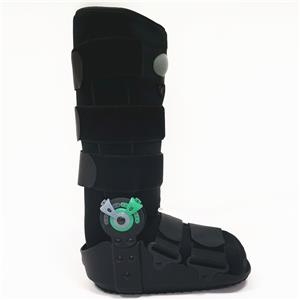
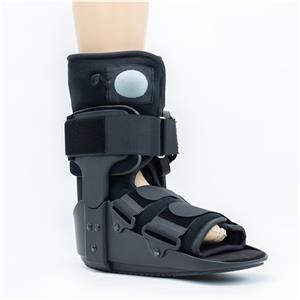
A telescopic support brace uses overlapping structural sections that slide against each other, so the effective length of the brace can be set anywhere within a defined range. Instead of stocking four to six sizes of the same model, a distributor stocks one adjustable unit that is set at the point of fitting, which is the practical purpose behind the term telescopic support braces.
How the Adjustment Mechanism Works
The sliding sections are held by a locking mechanism — commonly a key, a pin, or a levered clamp — that fixes the length once it has been set. Because the length is continuously adjustable rather than stepped in fixed increments, a single unit can be matched to a wider spread of limb lengths, and the same stock item can serve accounts with different patient populations.
Universal Braces and Adjustment Headroom
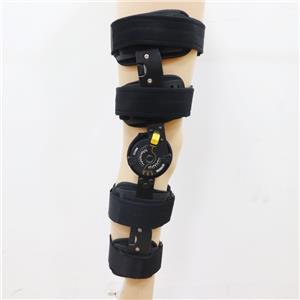
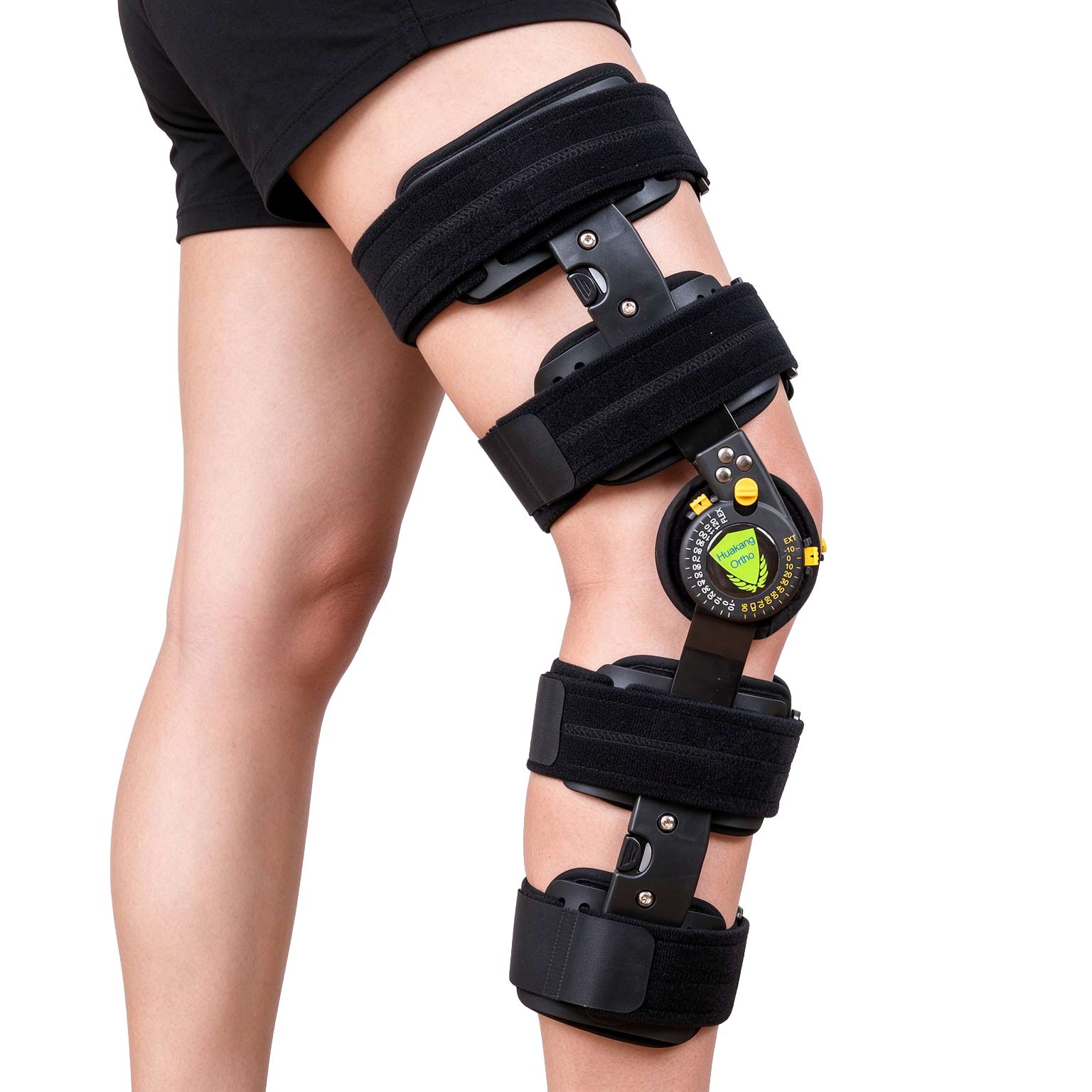
Universal braces apply the same logic through straps, hinges, and modular panels rather than telescopic sections. A universal back brace relies on adjustable circumferential strapping to cover a broad waist range; a universal or hinged knee brace uses adjustable arms and strap length to accommodate different leg dimensions. The design intent is identical: convert size into adjustment headroom, and let the fitter take up the difference.
Where Adjustable Designs Reduce Cost Across the Supply Chain
Lower SKU Count and Safety Stock
If one adjustable unit covers what previously required several sizes, the number of active stock-keeping units falls accordingly. Fewer items mean less safety stock at each stocking point, a simpler reorder routine, and a lower probability that a specific size is unavailable when an order arrives. For a distributor running several regional warehouses, the effect compounds across locations.
Fewer Slow-Moving Items and Write-Offs
Slow-moving sizes are normally the main source of dead stock in a bracing catalogue. When demand is spread across a wide size grid, the tail sizes absorb capital and are eventually discounted or written off. Consolidating that grid into one adjustable unit concentrates demand on fewer items, so forecast error becomes cheaper to absorb and end-of-cycle markdowns shrink.
Less Warehouse Space and Handling Labor
A smaller SKU set also reduces shelf space, simplifies picking and packing, and shortens counting and cycle-count routines. Storage and handling are easy to overlook because they are diffuse costs, but they scale with the number of items a warehouse has to track, not only with total unit volume.
The Trade-Offs Buyers Should Weigh
Adjustable designs are not automatically superior in every case. Some clinical protocols call for rigid fixation with no adjustment movement at all; some high-volume sizes are cheaper per unit when bought as fixed-size goods; and hospital accounts with standardized sizing procedures may prefer fixed sizes because their own inventory control depends on discrete items.
For most distributors the practical question is portfolio mix rather than wholesale replacement. Adjustable braces tend to work best as the core stock-keeping item for mid-volume, multi-account distribution, with fixed sizes retained where a specific account demands them or where volume justifies dedicated stock.
What Distributors Should Check Before Switching
When evaluating telescopic and universal braces against a sized line, the comparison should cover more than unit price.
Adjustment range: Confirm the minimum and maximum length or circumference, and whether one unit covers pediatric through adult fit or only the adult range.
Locking security: Check that the mechanism holds under load and does not slip during walking, transferring, or overnight wear.
Structural rigidity: Confirm the brace maintains support at both ends of its adjustment range, not only in the middle position.
Durability: Ask about cycle testing of the adjustment mechanism, strap and webbing wear, and which components are replaceable.
Labeling and documentation: Confirm size marking, instructions for use, and labeling meet the requirements of your destination market.
OEM and ODM flexibility: Confirm logo placement, packaging, size-set configuration, and sample lead times before committing to bulk production.
Explore Huakang's Telescopic and Universal Brace Range
Xiamen Huakang Orthopedic manufactures telescopic support braces and universal orthopedic braces for distributors, brand owners, and rehabilitation suppliers. Design features available across the range include telescopic length adjustment with a locking key, adjustable hinge and strap systems on orthopedic knee braces, and universal circumferential sizing on back brace models.
For distributors, these features provide a practical basis for consolidating a size grid and testing the effect on stock levels. Please refer to the product specifications for confirmed details, including adjustment ranges, materials, and available configurations.
Looking for a Brace Manufacturer?
If you are an orthopedic brand owner, medical device distributor, or rehabilitation product supplier, Xiamen Huakang Orthopedic welcomes inquiries about our telescopic and universal braces and potential OEM/ODM cooperation.
Contact our team to discuss product specifications, samples, packaging, and private-label requirements.
Explore our Telescopic Support Braces and Universal Braces collection for more product information.
Disclaimer: This article is for general product and industry information only. It does not replace professional medical advice or clinical guidance. Product selection, fitting, and use should follow the instructions of a qualified healthcare professional.