Rigid vs. Soft Orthopedic Shoes: When to Use Rigid Sole Shoes for Foot Recovery
 Rigid vs. Soft Orthopedic Shoes: When to Use Rigid Sole Shoes for Foot Recovery
Orthopedic shoes are one of the most widely prescribed categories in foot and ankle rehabilitation, yet the term is often used loosely. Many buyers — and many end users — treat “orthopedic shoe” as a synonym for comfort footwear, when the clinical difference between the two usually comes down to a single structural feature: the sole.
Rigid sole shoes and soft orthopedic shoes are built for different stages of recovery, different levels of instability and different activity levels. Specifying the wrong type can reduce support, slow rehabilitation, or increase the risk of re-injury. This guide sets out the design differences, the indications for each type, the patient factors that decide between them, and what distributors should verify before adding a model to inventory.
Basic Design Differences
What Makes a Shoe “Rigid Sole”?
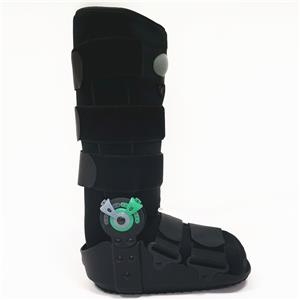
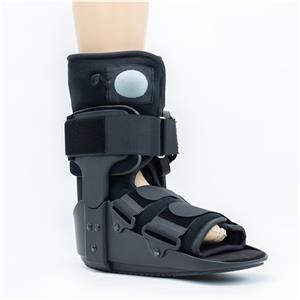
A rigid sole shoe is defined by a firm, inflexible midsole or outsole that limits bending at the forefoot, midfoot or ankle. In more advanced models, rigidity is reinforced by a plastic insert, carbon fibre plate, steel shank or stiff leather construction. The purpose is to hold the foot in a more neutral position and reduce unwanted motion while healing.
Structural features of a rigid sole model typically include a sole that does not bend easily under hand pressure, a reinforced heel counter for rearfoot stability, deliberately limited forefoot flexion, extended medial or lateral support in some designs, and adjustable closures that can accommodate post-operative swelling.
What Makes a Shoe “Soft Orthopedic”?
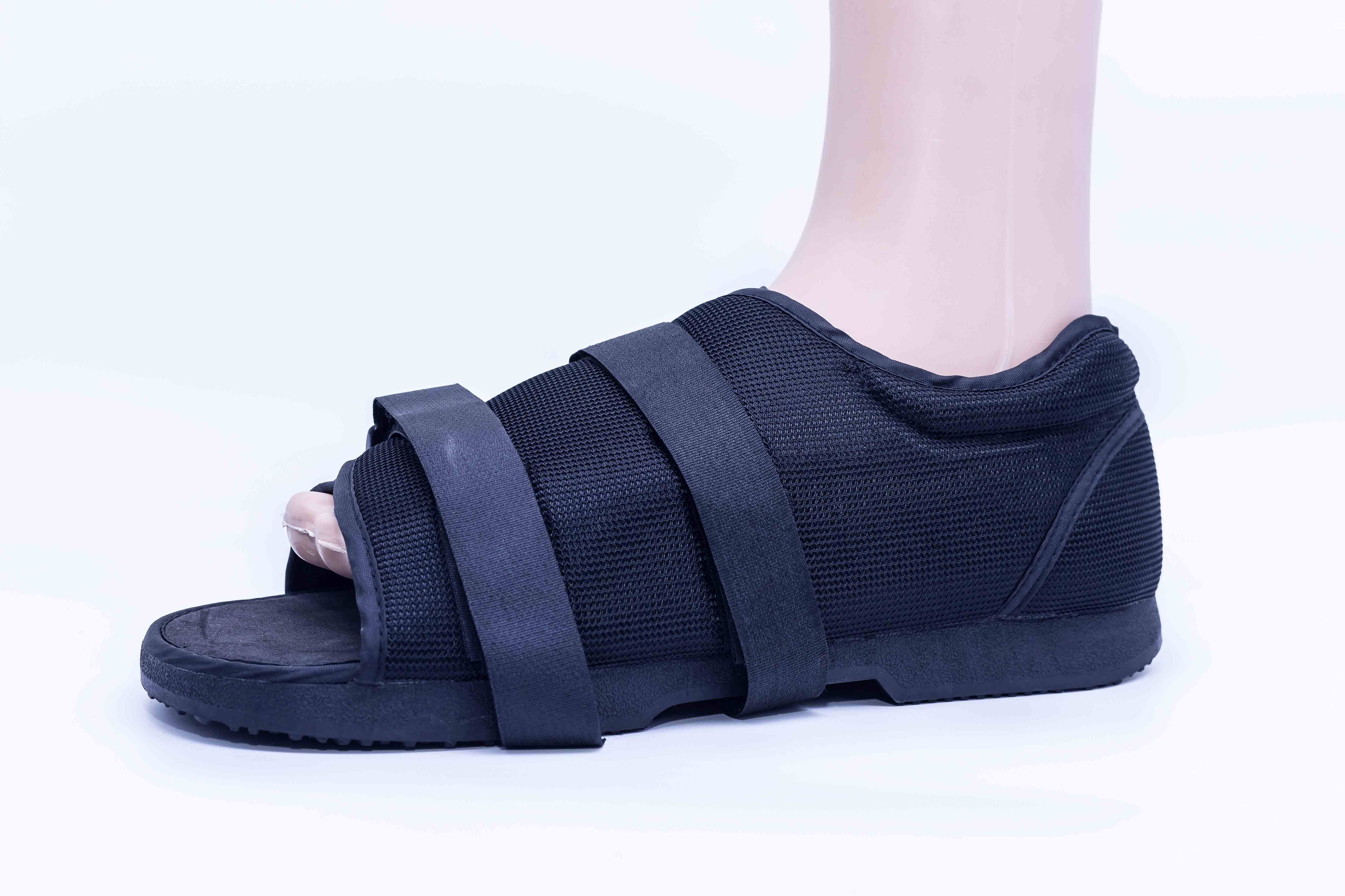
Soft orthopedic shoes prioritise cushioning, pressure distribution and comfort over structural control. They are usually built from flexible foam, soft fabric or lightweight EVA, and they allow a natural roll-through motion when walking. They are commonly recommended where the goal is relief from pressure, discomfort in the diabetic foot, mild plantar symptoms, or general post-operative soreness rather than motion restriction.
Typical features are a flexible sole that permits natural movement, a padded upper that reduces friction, lightweight construction, removable insoles that can accept a custom orthotic, and a wide opening for easier dressing.
Clinical Function Comparison
Motion Control
Rigid sole shoes control motion. They are specified when the treatment plan needs to limit dorsiflexion, plantarflexion, supination, pronation or forefoot bending during healing. Soft orthopedic shoes do not deliver meaningful motion control, so they are not a substitute where stability is the primary requirement.
Load Sharing and Pressure Relief
Soft orthopedic shoes are generally the better tool for pressure distribution. Their cushioning reduces peak stress over ulcers, calluses, bony prominences and sensitive post-operative areas. A rigid shoe can also reduce load through the limb, but its contribution is stability rather than comfort-oriented offloading.
Healing Phase Adaptability
Rigid designs tend to belong to earlier, more protected phases of recovery; soft designs belong to later rehabilitation, maintenance and supportive care. That is a general pattern rather than a rule, because the phase boundaries are set by the treating clinician.
Indications: When to Choose Each Type
Typical Indications for Rigid Sole Shoes
A rigid shoe is usually preferred where the plan requires stability and controlled ambulation. Typical indications are post-operative recovery after foot or ankle surgery, severe ankle instability, Lisfranc and other midfoot injuries, selected metatarsal and forefoot fractures, hallux rigidus with a limited first metatarsophalangeal joint, and any situation where protected weight-bearing is prescribed.
Typical Indications for Soft Orthopedic Shoes
A soft orthopedic shoe is more appropriate where comfort, pressure relief and mobility are the priorities. Typical indications are diabetic foot care and ulcer prevention, mild plantar fasciitis or heel pain, general post-operative soreness where rigidity is not required, pressure-sensitive areas and bony prominences, and older or less steady patients for whom a rigid shoe is too heavy or too difficult to manage.
Patient Factors That Influence the Choice
Age and Activity Level
Younger and more active patients often tolerate a stiffer shoe and need better control through rehabilitation. Older or more sedentary patients frequently do better in a lighter, softer shoe that is easier to put on and more comfortable for daily use.
Foot Shape and Edema
Significant swelling, deformity or fragile skin can make a rigid upper intolerable. In those cases a soft shoe with a wide opening and adjustable closures is the practical choice even where some rigidity would be clinically useful, because a shoe that cannot be worn provides no support at all.
Compliance and Daily Use
A clinically correct shoe that is uncomfortable will not be worn as prescribed. For long-term daily use, comfort and ease of use carry as much weight as structural performance, which is why the two categories are not direct substitutes but neighbours in the same patient pathway.
Common Misconceptions
“Orthopedic” Does Not Automatically Mean “Stable”
Many patients assume that any shoe described as orthopedic provides strong stability. In practice a soft orthopedic shoe can deliver excellent comfort and pressure relief while offering very little ankle or midfoot control.
More Rigidity Is Not Always Better
A stiffer shoe can improve healing conditions for some patients, but it can also reduce mobility, raise energy expenditure during walking, and lower compliance. Over-prescribing rigidity creates dependence without adding clinical benefit.
Soft Shoes Are Not Just “Comfort Shoes”
Soft orthopedic footwear has a legitimate clinical role in diabetic foot management, ulcer prevention and late-stage rehabilitation. It should be selected on indication, not dismissed as consumer comfort product.
What Distributors Should Check Before Adding These Products
Sole Rigidity Level
The most important specification is how much the sole resists bending. Ask suppliers for structural descriptions, bending test information and stated indications rather than relying on marketing language such as “firm support”.
Size Range and Fitting System
An orthopedic shoe only works if it fits. Confirm the size grid, width options, adjustability, weight range, and whether the model is built on separate left and right lasts.
Material and Skin Compatibility
Upper materials, lining, closures and seam construction determine skin tolerance, particularly for elderly, diabetic and sensitive-skin patients. Soft models in particular should be checked for friction and pressure points at the seams and strap edges.
Clinical Indication Statement
Every model should carry a clear indication statement, whether from the manufacturer or in the prescribing clinician’s protocol. Stock should be avoided where the product relies on general medical claims that never specify intended conditions.
Reimbursement and Regulatory Status
In many markets orthopedic footwear is a reimbursable or regulated medical device. Verify classification, coding requirements, documentation and country-specific compliance before committing to a large order.
Rigid and Soft Orthopedic Shoes at a Glance
Category | Rigid Sole Shoes | Soft Orthopedic Shoes |
Main function | Stability and motion control | Comfort and pressure relief |
Best for | Post-operative recovery, severe instability, midfoot and forefoot injuries | Diabetic care, ulcers, mild pain, sensitive skin |
Sole flexibility | Low | High |
Typical weight | Usually heavier | Usually lighter |
Patient compliance | Lower if the shoe is uncomfortable | Often higher for daily use |
Main risk | Over-immobilisation when over-prescribed | Insufficient support when support is needed |
Conclusion
Rigid sole shoes and soft orthopedic shoes both belong in foot and ankle care, but they do different jobs. Rigid designs prioritise stability and controlled healing; soft designs prioritise comfort, pressure relief and mobility. The right choice depends on the stage of recovery, the injury pattern, the condition of the patient’s skin, and the treating clinician’s plan.
For distributors, the practical conclusion is to stock both categories with clear indications attached to each model, rather than to position one as universally superior. A balanced footwear programme covers more patients and lowers the risk of wrong-product selection.
Explore Huakang’s Orthopedic Footwear Range
Xiamen Huakang Orthopedic manufactures orthopedic footwear, ankle foot orthoses and post-operative bracing for distributors, brand owners and rehabilitation suppliers. The range covers rigid sole and soft padded constructions, removable liners and insoles, and size grids built for both single-account and multi-account distribution.
For distributors, the practical value is a single source that can supply the protective and the comfort segment of the same recovery pathway, with consistent sizing and private-label options. Please refer to the product specifications for confirmed details, including sole construction, size range and available configurations.
Looking for an Orthopedic Footwear Manufacturer?
If you are an orthopedic brand owner, medical device distributor, or rehabilitation product supplier, Xiamen Huakang Orthopedic welcomes inquiries about our orthopedic footwear and potential OEM/ODM cooperation.
Contact our team to discuss product specifications, samples, packaging, and private-label requirements.
Explore our Ankle Foot Orthotics collection for more product information.
Disclaimer: This article is for general product and industry information only. It does not replace professional medical advice or clinical guidance. Product selection, fitting, and use should follow the instructions of a qualified healthcare professional.