A Buyer’s Guide to Sourcing Posture Correctors Directly from a Factory
 A Buyer’s Guide to Sourcing Posture Correctors Directly from a Factory
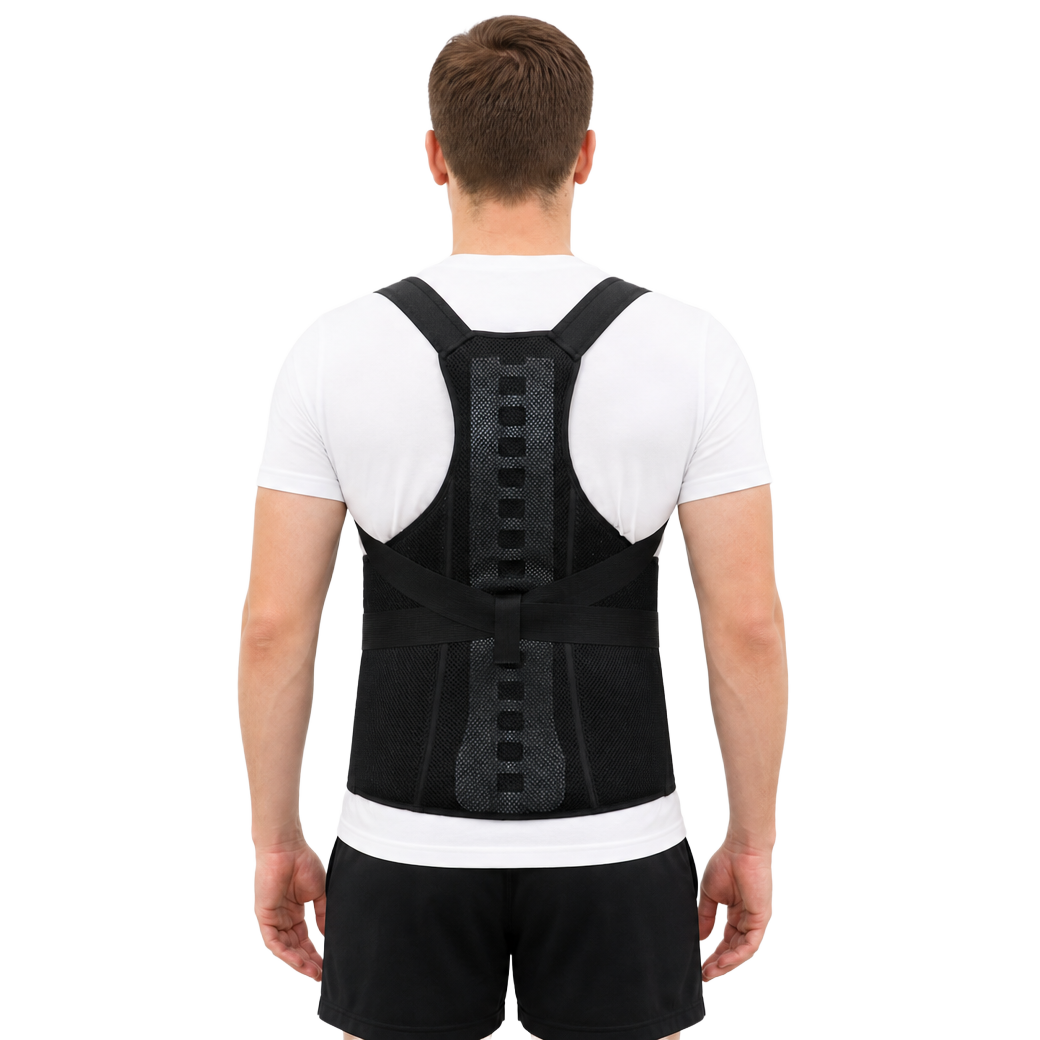
Posture correctors have moved from a niche rehabilitation accessory into a mainstream category. Adults working long hours at desks, parents buying support for teenagers, clinics adding conservative posture programmes, and e-commerce sellers building private-label ranges all buy the same basic product form: a figure-eight shoulder harness that retracts the shoulders and gently extends the thoracic spine. As global unit demand rises, a growing number of brands and distributors now choose to buy from a posture corrector factory in China rather than through a trading agent.
Factory-direct sourcing, however, changes more than the price printed on a quotation. It moves specification ownership, quality risk and change control onto the buyer’s side of the table. A buyer who cannot define strap geometry, fastener grade or size grading in writing will still receive a shipment — it will simply be a shipment of whatever the factory considers acceptable. This guide sets out what to define before requesting a quotation, what to verify when auditing posture corrector manufacturers, and how to structure a first order so that a trial run does not become a write-off.
Why Factory-Direct Sourcing Changes the Economics of a Posture Corrector Program
Trading companies and factories quote different things. A trading company quotes a catalogue item plus a margin; a manufacturer quotes a construction, a tooling investment and a capacity slot. That difference shows up in four places.
Unit cost transparency:
● Manufacturer quotations expose the component breakdown — webbing, spacer mesh, stays, fasteners, sewing labour and packaging — so buyers can see where cost actually sits and negotiate against a defined structure instead of a single number.
Pattern and tooling ownership:
● Die-cut patterns, sizing blocks and printing plates are created for a specific construction. Buyers should confirm in writing who owns those files, whether they transfer on request, and what happens to them if the relationship ends.
Change-order speed:
● A specification change — a wider strap, softer edge binding, one additional reinforcement stitch — passes through a single communication chain when buying direct, and through two or three when an intermediary sits in between.
MOQ and scale-up ladder:
● Factories structure minimum order quantities around material buys and line set-up. Knowing the ladder in advance lets posture corrector wholesale buyers plan a small validation order and a scale-up order without re-negotiating price at every step.
Defining the Specification Before You Request a Quotation
Most sourcing problems that surface three months later began as a vague specification. A posture corrector looks simple — two shoulder straps, a figure-eight cross back and a waist belt — yet three component groups determine most of the factory cost, the wearer experience and the regulatory classification.
1. Textile and Webbing Platform
Elastic webbing and band construction:
● Specify width, thickness, elastic recovery rate and elongation at the working load. Strap elasticity decides how much correction the product delivers and how quickly it relaxes after repeated wear and washing.
Breathable contact surfaces:
● Underarm and axillary panels sit against skin for hours. Spacer mesh, ventilated foam or perforated laminate should be defined by weight per square metre and air permeability, not by a photograph.
Colourfastness and skin safety:
● Dyed webbing and binding tape should be specified against washing, perspiration and rubbing fastness, with OEKO-TEX Standard 100 and REACH restricted-substance documentation requested at quotation stage.
2. Support and Structural Elements
Posture stays and spinal alignment bars:
● Removable or sewn-in stays provide the thoracic cue. Define material — PP, PE or spring steel — plus thickness, edge treatment and bend memory, since a stay that kinks or protrudes through its casing is the most common field complaint.
Shoulder strap geometry:
● Strap angle, cross-back position and pad placement control comfort and decide whether the product retracts the shoulders without restricting breathing. A dimensioned technical drawing is the only reliable way to keep this geometry stable across a size run.
Reinforcement at load points:
● The cross junction and the strap-to-belt anchors carry the highest tension. Bartack or box-X reinforcement, thread specification and stitch density should all appear on the drawing.
3. Fastening, Adjustment and Fit Range
Hook-and-loop fastener grade:
● Closure performance is cyclical, not static. Ask for peel and shear data covering a defined number of open-close cycles, and specify hook density and loop backing rather than accepting a generic “velcro” description.
Size grading and adjustment travel:
● Posture correctors are usually sold in S to XXL with overlapping adjustment ranges. Define the master measurement table, the tolerances around it and the adjustment travel each size must cover, so that adjacent sizes do not collapse into one another.
Wearability validation:
● A wearable orthosis should be judged on a defined wear protocol — duration, activity and removal cycle — before bulk release. Without a protocol, comfort complaints arrive after the goods are already on shelves.
What to Verify Inside a Posture Corrector Factory
A supplier’s catalogue shows capability; the production floor shows control. For a posture corrector programme, these verification points separate a compliant medical device manufacturer from an assembly workshop.
1. Certifications and Compliance Documents
Quality management system:
● Confirm a current ISO 13485 certificate covering the actual production site and scope, not a group-level certificate issued to a different facility.
Market access registrations:
● For the United States, check FDA establishment registration and the product’s classification pathway; for the European Union, confirm a valid EU MDR technical file and a declaration of conformity for the intended class.
Material compliance:
● Request REACH declarations, OEKO-TEX or equivalent textile test reports, and skin-contact biocompatibility data from an accredited laboratory.
2. In-House Testing and Inspection
Fastener cycle testing:
● A factory that sells posture correctors should own or routinely commission peel and shear cycle testing. Ask for the equipment, the protocol and the results of the last three production lots.
Tensile and seam strength:
● Strap-to-belt junctions and the cross-back seam should be pull-tested to a stated load. Destructive samples taken per lot, with recorded values, indicate whether testing is routine or decorative.
Dimensional audit:
● Verify that flat measurements are checked against the master size chart at a defined inspection frequency, and that out-of-tolerance lots are quarantined rather than quietly reworked into the shipment.
3. Capacity, Lead Time and Order Discipline
Line allocation and seasonality:
● Ask how many sewing lines are dedicated to posture support and what lead time applies in peak season, so that a repeat order does not slip two months behind schedule.
Golden sample control:
● A signed pre-production sample with a technical data sheet, tolerance ranges and reference photographs should be retained by both parties and cited in the purchase order.
Packaging and labelling:
● Private-label cartons, polybags, size stickers, washing labels and multilingual instructions for use are frequent sources of delay. Confirm the artwork approval flow and barcode verification before production starts.
How to Structure a First Order Without Carrying Excess Risk
Direct sourcing rewards buyers who stage their commitment. Four practices keep a first programme controllable.
Start with a validation order:
● A pilot quantity large enough to run a real production set-up — typically one size curve rather than one size — tests tooling, colour matching and packing before volume is committed.
Dual-source the first season:
● Qualifying a second posture corrector manufacturer for the same construction protects continuity and provides a factual basis for price and lead-time discussions later.
Freeze the technical data sheet:
● Once the golden sample is approved, the technical data sheet, drawing revision and inspection plan should be frozen and version-controlled. Every later change should be a documented revision, not a verbal adjustment.
Tie payments to inspection milestones:
● Deposit, pre-shipment inspection and balance against documents is a standard structure. Third-party inspection before the balance payment remains the cheapest quality insurance available.
Explore Huakang’s Posture Corrector and Ortho Support Manufacturing
Xiamen Huakang Orthopedic is a Chinese manufacturer of orthopedic braces and rehabilitation supports, supplying healthcare brands, medical distributors and private-label programmes worldwide with OEM and ODM production.
Our posture support range covers figure-eight posture correctors, upper back and shoulder support braces, clavicle and figure-of-eight supports, and lumbar belts engineered to work alongside posture correction. Each model is built on a defined webbing and mesh platform, dimensioned strap geometry, reinforced cross-back construction and replaceable stay systems, so that fit and corrective effect remain consistent across the full size range.
With ISO 13485 certified facilities, in-house tensile, fastener-cycle and dimensional testing, and documented IQC, IPQC and FQC controls, Huakang keeps every production lot aligned with the approved golden sample and the technical data sheet that governs it.
Looking for a Reliable Posture Corrector Manufacturer in China?
If you are a brand owner, medical distributor or e-commerce supplier planning a posture corrector line, our team can review your construction requirements, quote against a defined bill of materials, and produce pre-production samples for fit and wear validation.
Contact our technical sales team to discuss strap geometry, fastener specifications, size grading, certification documents or private-label packaging, and to arrange a sample set from our posture support collection.
Disclaimer: This article is for general product and industry information only. It does not replace professional medical advice. Product selection, fitting and use should follow the guidance of a qualified healthcare professional.