Pneumatic vs Non-Pneumatic Walking Boots: Which Is Best for Ankle Fractures?
 Pneumatic vs Non-Pneumatic Walking Boots: Which Is Best for Ankle Fractures?
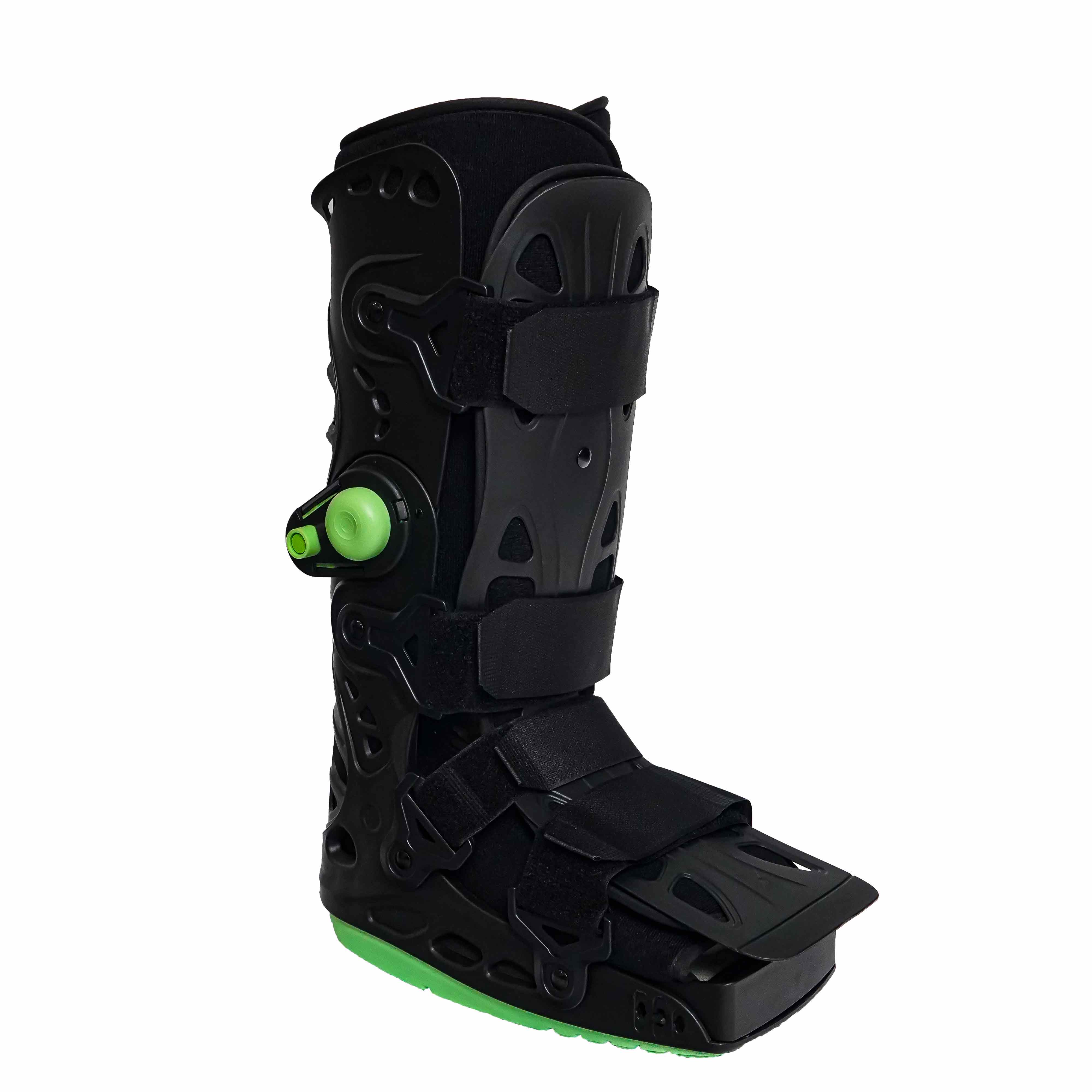
Ankle fracture protocols usually leave the choice of walking boot to the treating clinician, but the boot that reaches the patient is selected somewhere else: in the purchasing decision of the distributor, hospital clinic, or rehabilitation supplier that stocks it. Two architectures dominate that category. The pneumatic walking boot uses inflatable air bladders to compress the leg, while the non-pneumatic boot relies on fixed foam or mesh liners held by straps inside a rigid shell.
The two designs treat the same injury but behave differently in edema control, fit across limb shapes, patient self-management, and the cost of keeping them in stock. For buyers, the useful comparison of pneumatic vs non-pneumatic walking boots is not which design is better in general, but which architecture matches the protocols and account mix they actually serve.
Pneumatic vs Non-Pneumatic Walking Boots: How the Two Designs Differ
Inside a Pneumatic Walking Boot
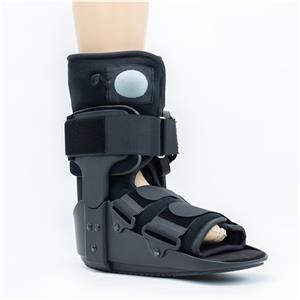
A pneumatic walking boot carries one or more air chambers between the rigid shell and the leg. A hand pump inflates those chambers through a valve, and the air distributes pressure around the ankle and calf instead of concentrating it at the strap line. Because pressure is set by inflation rather than by strap tension alone, the same unit can be re-tensioned as swelling changes in the first weeks after injury, which is the practical reason pneumatic boots are common in post-trauma and post-operative care. The trade-off is a longer parts list: bladders, tubing, a valve, and a pump that can be lost, damaged, or blocked.
Inside a Non-Pneumatic Walking Boot
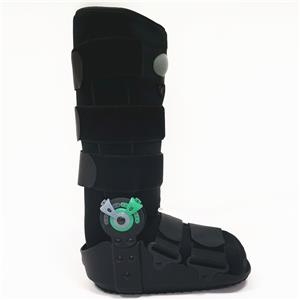
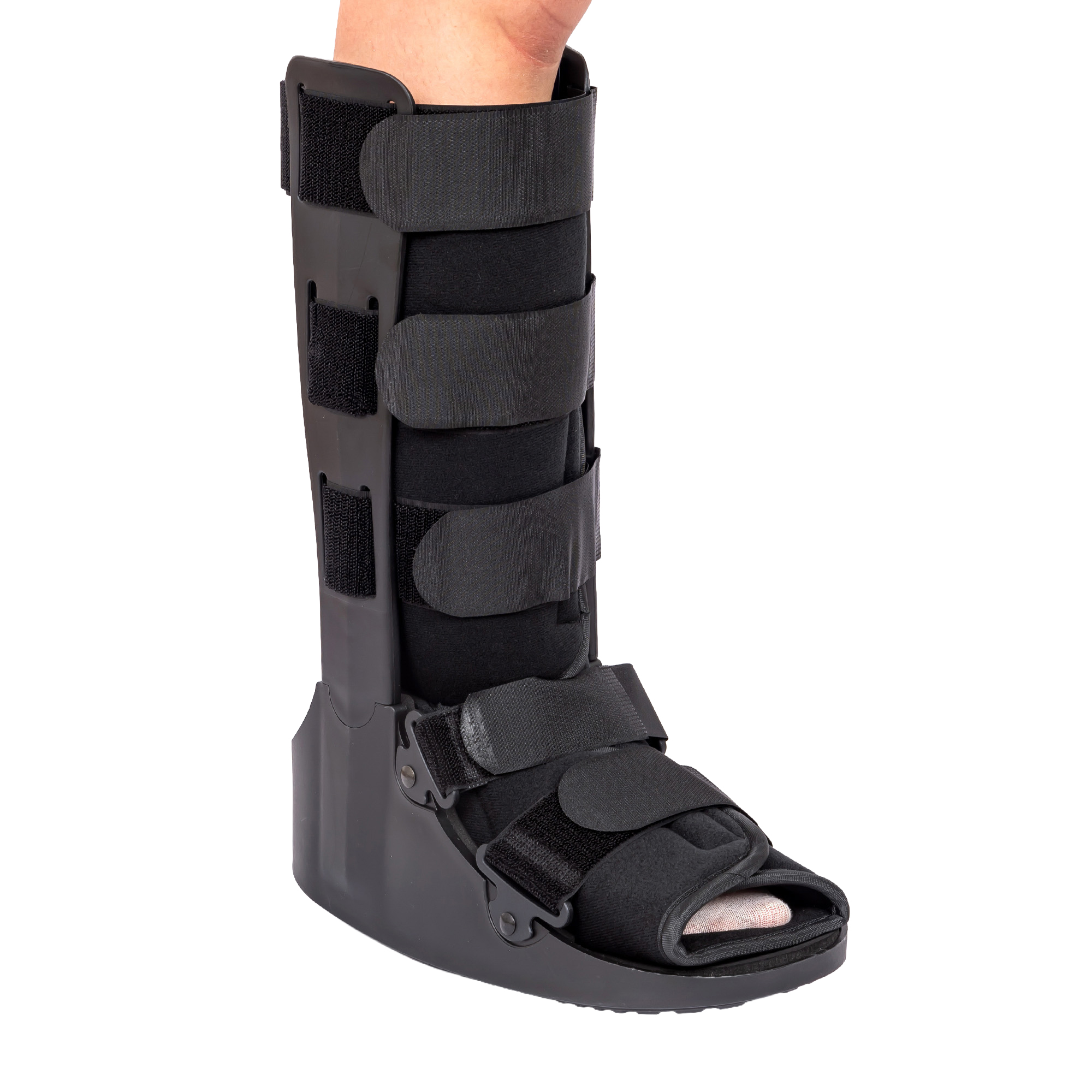
A non-pneumatic walking boot uses the same rigid shell and rocker sole but holds the limb with foam padding, a mesh or fabric liner, and straps. Compression comes from how the straps are tensioned and how well the liner fills the space between leg and shell, so fit is essentially fixed by the size chosen at fitting. Fewer parts mean fewer failure points and a simpler cleaning routine, but the boot cannot be re-tensioned as swelling falls or as the leg changes shape during recovery. Foam walker boots and mesh walker braces belong to this family.
What Both Designs Share
Both designs immobilize the ankle in a fixed plantar angle, protect the fracture with a rigid shell, and use a rocker sole so the foot rolls forward instead of flexing at the ankle. Both depend on correct sizing and correct strap placement for their clinical effect. The difference lies in how the boot generates and maintains contact with the leg, and that difference drives the procurement consequences below.
Clinical Differences That Matter in Ankle Fracture Care
Edema Control and Adjustable Compression
Swelling after an ankle fracture or surgery rises and falls unevenly, and a boot that fits well on day one may be loose by week two. A pneumatic boot lets clinical staff raise or lower pressure with the pump, so contact can be maintained without changing devices. A non-pneumatic boot manages the same problem through liner thickness and strap tension, which works but is less precise, particularly when the boot is applied by different staff on different shifts.
Fit Across Different Limb Shapes
Limb circumference and calf taper vary widely between patients. Air bladders conform to irregular contours and fill gaps that a fixed liner cannot, so a pneumatic boot tolerates a wider range of leg shapes within a given size. A non-pneumatic boot depends more on the liner matching the leg: where the liner is too thin, pressure points develop, and where it is too thick, the shell no longer closes securely. Distributors serving mixed patient populations should treat this as a sizing-cost question, not only a comfort question.
Patient Compliance and Self-Management
Pneumatic boots shift responsibility to the patient. The pump has to be used as instructed, and over-inflation is as much a problem as under-inflation, which suits motivated patients in structured follow-up but is harder to guarantee where instruction time is limited. Non-pneumatic boots are simpler to put on and adjust, with no pump and no valve, which tends to improve consistency when patients manage the device at home.
Skin Care, Cleaning, and Replacement
Air bladders contact the skin indirectly through the liner and can be wiped down between patients, while foam liners absorb sweat and need replacement more often. Both families should be inspected for skin irritation at each follow-up. For buyers, the practical point is that liners, bladders, and pumps are consumable or replaceable parts, and their availability shapes the true cost of the boot across a treatment cycle.
Procurement and Lifecycle Cost Comparison
Unit Price and Accessory Cost
Non-pneumatic boots generally carry a lower unit price because they contain fewer components. A pneumatic boot adds bladders, a valve, and a pump to the bill of materials, and those parts bring their own replacement and warranty exposure. The comparison should be made on cost per completed treatment rather than cost per box, and should include the spares a clinic will actually consume.
Inventory Complexity
A pneumatic programme stocks the shell and the pump as separate items and usually stocks spare bladders. A non-pneumatic programme stocks shells and a small range of liners. Neither is automatically simpler, but the pneumatic line carries more line items per SKU and more ways for a shipment to arrive incomplete, which matters to distributors running several stocking points.
Durability, Returns, and Failure Modes
Typical pneumatic failures are leaks at the valve, punctured bladders, and blocked tubing; typical non-pneumatic failures are compressed foam, worn straps, and broken buckles. Both are manageable, but the failure modes point to different after-sales costs, since pneumatic returns tend to be functional and non-pneumatic returns tend to be wear-related. Ask suppliers for leak and cycle testing data, and for the list of replaceable parts.
Tender and Protocol Requirements
Many hospital tenders specify one architecture, and some specify both for different departments. Before quoting, confirm the tender language, the accessories required, and whether spare parts must appear as separate line items. A supplier that cannot document these items creates extra work for the purchasing team later in the process.
When Each Design Is the Better Buy
A pneumatic walking boot is usually the better fit where edema management is central, where one device must adapt as swelling changes, and where staff can instruct patients on pump use. A non-pneumatic boot is usually the better fit for high-volume, cost-sensitive purchasing, for simple home-care protocols, and for accounts where a device is worn for longer periods and consumable supply is hard to manage.
For most distributors the answer is a mixed line: pneumatic boots as the higher-acuity item for clinics and post-operative accounts, and non-pneumatic boots as the volume item for routine fracture care. That split keeps clinical coverage broad without forcing every account onto the more expensive architecture.
What Buyers Should Verify Before Ordering
Price and sample quality are only the start of a walking boot comparison. The items below are where sourcing problems usually surface.
Compression range: Confirm how pressure is set and held on the pneumatic version, and how liner thickness maps to leg circumference on the non-pneumatic version.
Valve and pump reliability: Ask for leak-test data, and confirm whether the pump and valve are covered by warranty or sold as service parts.
Liner and bladder supply: Confirm that liners, bladders, and straps can be reordered separately, and what the minimum order is for each.
Sizing and fit range: Check the size chart against your patient population, and confirm the shell fits over dressings and bandages.
Testing and documentation: Confirm CE, FDA, and ISO 13485 status for your destination market, together with labeling, instructions for use, and packaging language.
OEM and ODM terms: Confirm logo placement, packaging, size-set configuration, MOQ, and sample lead times before committing to bulk production.
Explore Huakang's Walking Boot Range
Xiamen Huakang Orthopedic manufactures pneumatic and non-pneumatic walking boots, including foam walker boots and ROM cam boots, for distributors, hospital suppliers, and rehabilitation brands. The range is built around rigid shells with rocker soles, adjustable strap systems, and replaceable liners, and can be configured for different market requirements.
For distributors comparing the two architectures, the range provides a practical way to test both designs on the same account before committing a full season of stock. Please refer to the product specifications for confirmed details on sizing, materials, and available accessories.
Looking for a Walking Boot Manufacturer?
If you are a medical device distributor, orthopedic brand owner, or rehabilitation product supplier, Xiamen Huakang Orthopedic welcomes inquiries about pneumatic and non-pneumatic walking boots and potential OEM/ODM cooperation.
Contact our team to discuss specifications, samples, packaging, and private-label requirements.
Explore our Walking Boots collection for more product information.
Disclaimer: This article is for general product and industry information only. It does not replace professional medical advice or clinical guidance. Product selection, fitting, and use should follow the instructions of a qualified healthcare professional.