How to Choose an MDR-Compliant Orthopedic Brace Supplier in Europe
Why supplier compliance matters in European orthopedic brace sourcing
For European distributors and importers, choosing an MDR compliant orthopedic brace supplier is not only a purchasing decision. It is also part of managing product safety, traceability, documentation, and market-access risk. A low quotation may look attractive at the beginning, but incomplete technical files, unclear labeling, or weak post-market support can create delays after the order has already been shipped.
The European Commission explains that manufacturers, authorised representatives, importers, and distributors have specific responsibilities under the Medical Device Regulation (MDR). These responsibilities are designed to support the safety, effectiveness, and traceability of medical devices throughout the supply chain. For that reason, a professional sourcing process should evaluate both the product and the supplier system behind it. A medical brace manufacturer Europe importers shortlist should be reviewed against the same document and traceability standards.
This guide is written for distributors, importers, private-label buyers, rehabilitation equipment wholesalers, and procurement teams that are comparing CE marked orthopedic braces for the European market. When reviewing CE marked orthopedic braces, buyers should evaluate the product model, documentation, labeling, and supply support together.
1. Start with the supplier’s legal and quality documentation
The first step is to ask the supplier for a clear documentation package. Do not rely on a product title that simply includes the words “CE” or “MDR.” Ask which legal entity is responsible for manufacturing the product and which documents apply to the exact model you intend to purchase.
A practical document request may include:
Current certificate information relevant to the manufacturer and applicable quality-management system.
Declaration of Conformity for the specific device family or product model, where applicable.
Product classification and intended-purpose information.
Instructions for use, labeling content, packaging information, and language availability.
Basic traceability information, including model, batch, or lot identification where applicable.
Contact details for the manufacturer and the relevant European economic operator when required.
A reliable MDR compliant orthopedic brace supplier should be able to explain which document belongs to which product. If a supplier sends one generic certificate but cannot connect it to the product model, ask for clarification before placing a purchase order.
2. Check whether the product information matches the physical device
Documentation is useful only when it matches the product that will be shipped. Compare the product name, model reference, intended purpose, photographs, packaging, and instructions. Small inconsistencies can become a problem when a distributor prepares a private-label launch or responds to a market-surveillance request.
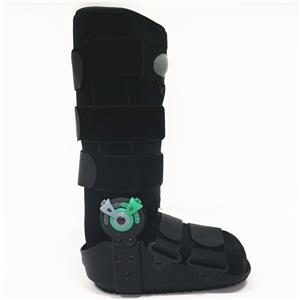
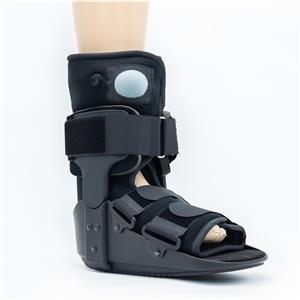
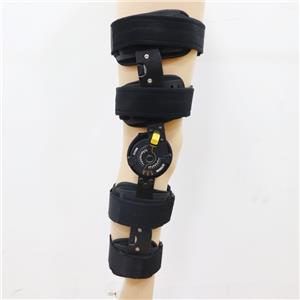
For a knee brace, for example, the buyer should confirm whether the product is intended for postoperative range-of-motion support, osteoarthritis unloading, general stabilization, or another stated use. For a walker boot, confirm the model type, available sizes, and the product information supplied with the actual configuration. For a lumbar brace, check whether the listed product description matches the structure and adjustment method shown in the sample.
Do not use marketing language to replace regulatory or technical documentation. Terms such as “premium,” “medical grade,” or “hospital quality” do not prove conformity by themselves. The safest approach is to build a product-level checklist and verify every field against the supplier’s documents.
3. Review labeling, packaging, and language readiness
European distribution is not complete when the cartons leave the factory. Importers and distributors also need to review how the product is identified and how the user receives essential information. Depending on the product and market, labeling and instructions may need to be prepared in the language or languages required by the destination country.
Ask the supplier to provide a draft of the product label, retail box, instruction leaflet, and outer-carton markings before mass production. Check the following details:
Product name and model reference are consistent across documents and packaging.
Manufacturer information is clear and current.
Size, side, batch, lot, or other identification fields are readable where applicable.
Warnings, precautions, and use instructions are not hidden by private-label artwork.
Translation responsibilities are agreed before production, not after shipment.
Artwork approval includes a version number so that changes can be tracked.
A capable medical brace manufacturer Europe buyers can work with should provide an organized artwork and approval process. When comparing a medical brace manufacturer Europe distributors can rely on, ask how samples, packaging, and document updates are controlled. This is especially important for OEM and ODM projects, where the buyer’s logo, packaging, instructions, and market-specific content may be customized.
4. Confirm traceability and post-market communication
The MDR framework places emphasis on the life cycle of a medical device, including post-market monitoring and vigilance. Your supplier should therefore be able to explain how product complaints, quality issues, corrective actions, and batch questions are handled.
Before cooperation, ask practical questions:
Who is the contact person for quality or regulatory questions?
How are complaints recorded and investigated?
How quickly can the supplier identify a production batch?
What information is required when a customer reports a product problem?
How are design, material, packaging, or process changes communicated?
Can the supplier support document updates during the product life cycle?
These questions do not need to be complicated. The objective is to determine whether the factory has a repeatable process rather than relying on one salesperson’s personal memory. A long-term distributor relationship depends on predictable communication after the first shipment. An MDR compliant orthopedic brace supplier should be prepared to explain this process clearly.
5. Evaluate samples before comparing final pricing
A sample is not only for checking appearance. It is an opportunity to compare the actual product with its description and intended use. Create a sample evaluation form that covers fit, adjustment, comfort, component quality, packaging, instructions, and consistency with the quoted configuration.
For a knee brace, inspect hinge movement, strap adjustment, padding, edge finishing, and the stability of the frame. For a walker boot, inspect the shell, liner, closures, sole, size marking, and the consistency of the left and right versions if both are offered. For a back support, check the adjustment system, panel position, stitching, material feel, and whether the brace can be applied as described. These sample checks help confirm whether the quoted CE marked orthopedic braces match the approved configuration. The same review should be repeated for every CE marked orthopedic braces order that uses a new model, size range, label, or package design.
Record photographs and comments during sample approval. If a change is requested, ask the supplier to confirm whether the revised sample affects documents, packaging, labeling, or the product reference. This protects both parties from a common sourcing problem: the approved sample and the mass-production product are not the same configuration.
6. Use an importer checklist before placing the order
Use the following orthopedic brace importer checklist before issuing a purchase order:
Identify the exact product model, intended purpose, size range, and configuration.
Request documents that apply to the exact supplier and product family.
Match the product, packaging, instructions, and label information.
Confirm the required destination-market language and artwork responsibilities.
Approve a sample and record any changes in writing.
Confirm batch or lot traceability and complaint communication procedures.
Agree on inspection, packaging, lead time, and change-notification expectations.
Keep the approved documents and artwork with the purchase-order record.
This orthopedic brace importer checklist does not replace legal or regulatory advice. It is a procurement control that helps a buyer ask better questions and identify missing information earlier. Keep the completed orthopedic brace importer checklist with the quotation, sample approval, and purchase-order records. Reuse the orthopedic brace importer checklist when onboarding a second supplier or adding a new product family.
7. What to ask an MDR knee brace supplier
If your priority category is knee bracing, narrow the supplier conversation to the models you intend to sell. Ask whether the supplier supports OA offloader braces, hinged knee braces, ROM braces, pediatric configurations, or private-label programs. Then confirm which models are available for sample review and which documentation applies to each one.
A professional MDR knee brace supplier should also be able to discuss size grading, packaging options, sample lead time, minimum order quantity, production lead time, quality inspection, and OEM artwork. When comparing an MDR knee brace supplier for a European launch, request the same information from every shortlisted factory. These commercial details do not replace compliance, but they determine whether the product can be launched and replenished reliably.
Do not choose a supplier based only on the lowest initial unit price. Compare the total sourcing risk: sample approval, document readiness, label revisions, inspection cost, communication speed, replenishment reliability, and the time required to resolve a complaint.