Air Walker Boot vs Cast: Why Distributors Are Stocking Pneumatic Walker Boots in 2026
Why the Walker Boot Became the Default Choice for Ankle Fracture Care
Ten years ago, a stable ankle fracture almost always meant a plaster cast. Today, most orthopedic clinics in Europe and North America reach for a walker boot first. The reason is simple: a removable walker boot allows wound inspection, skin hygiene, early weight bearing and physiotherapy — none of which a rigid cast permits. For distributors, this clinical shift is the single most important reason the orthopedic walker boot category keeps growing faster than the overall bracing market, which analysts size at roughly USD 4.9 billion in 2026 with a mid-single-digit CAGR.
Air Walker Boot vs Standard Poly Walker: What Actually Differs
Buyers frequently ask us whether the air walker boot is worth the extra cost over a standard non-inflatable model. The honest answer depends on the indication.
Standard poly walker — a thermoplastic shell, foam liner and four to five straps. It immobilizes well and is the price-competitive option for high-volume tenders, pharmacy chains and rental fleets.
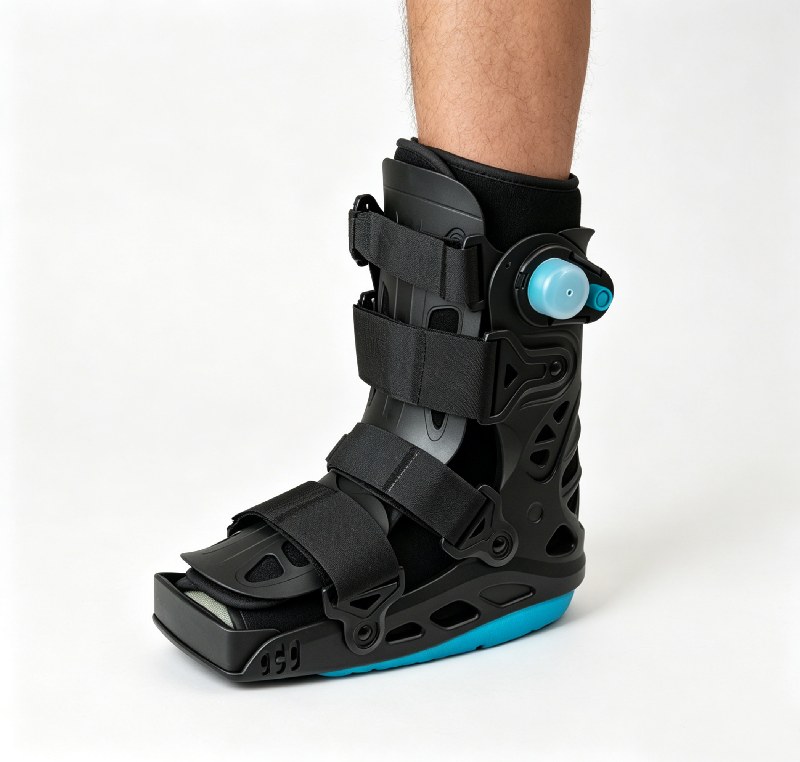
Pneumatic walker boot — the same shell plus integrated air bladders and a hand pump. The clinician inflates the liner to control oedema in the first two weeks, then deflates progressively as swelling resolves. This single feature makes the pneumatic walker boot the preferred device after surgery, where post-operative swelling is unpredictable.
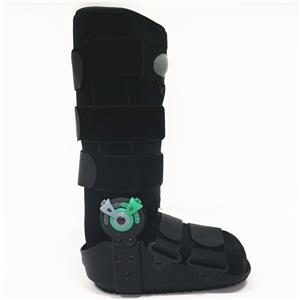
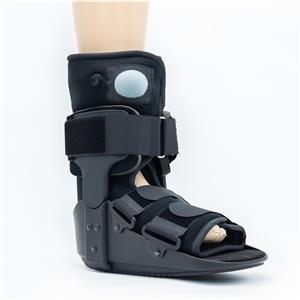
A cam walker fracture boot in tall configuration extends to just below the knee and controls both the ankle and the distal tibia. The short version stops mid-calf and is used for forefoot and metatarsal injuries, diabetic foot offloading and soft-tissue recovery. Most experienced buyers stock both heights in a roughly 60:40 tall-to-short ratio.
The Five Technical Points a Buyer Should Verify
Not every walker boot on the market performs the same. When we audit competing samples for customers, five points separate a clinically acceptable boot from a cheap copy.
Rocker sole geometry. The rocker must reproduce a natural heel-to-toe roll. A flat or badly angled sole forces compensatory hip and lumbar movement, which is the number one reason patients abandon the device.
Shell rigidity and uprights. The lateral and medial uprights must resist inversion and eversion under body weight. Thin, under-specified polypropylene flexes and gives false immobilization.
Liner breathability and washability. Patients wear the boot for six to eight weeks. A liner that cannot be removed and washed generates complaints and returns.
Air bladder durability. On a pneumatic walker boot, the valve and bladder seams are the failure points. Ask for a cycle-test report, not just a photo.
Regulatory file. For the EU you need MDR CE; for the United States, FDA registration; for the quality system, ISO 13485. Missing any one of these blocks customs or tender participation.
Who Buys Walker Boots — and What Each Channel Needs
Understanding the end channel changes the specification you should order.
Hospitals and orthopedic clinics want the air walker boot, full size range, and documentation that survives a procurement audit.
Pharmacy and retail chains want retail packaging, a simplified size grid (S/M/L instead of numeric shoe sizes), and multilingual instructions for use.
Online sellers want a lightweight cam walker fracture boot that keeps parcel weight and dimensional charges under control, plus clean product photography.
Rental and DME providers want maximum durability and a liner that can be replaced separately between patients.
If you are sourcing from an orthopedic walker boot supplier for the first time, tell them the channel before you talk price. A boot optimized for a hospital tender and a boot optimized for e-commerce are different products even when they look the same in photos.
Sizing, Packaging and the Hidden Cost of Getting It Wrong
Walker boots are bulky. A tall boot in a retail carton can occupy four to six times the volume of a knee sleeve, so freight, not unit price, often determines your landed cost. Two practical levers help: order a flat-pack or compressed-carton configuration where the shell nests, and consolidate sizes so that slow-moving extremes (XS, XXL) ship only against confirmed demand. On sizing, insist on a physical size chart validated against real shoe sizes in your market — European and North American size conventions do not map cleanly, and a mismatched chart generates returns that erase the margin on an entire container.
OEM and ODM: What Is Realistic to Customize
Most customers assume customization means printing a logo. In practice, the highest-value changes on a walker boot are functional: strap colour and count, liner fabric, sole tread pattern, pump position, and carton graphics. Tooling-level changes to the shell are possible but require volume commitments and a longer development cycle. A realistic first OEM project keeps the validated shell and customizes the soft goods, packaging and manual — that gets you a branded product in weeks rather than quarters.
Talk to a Certified Manufacturer
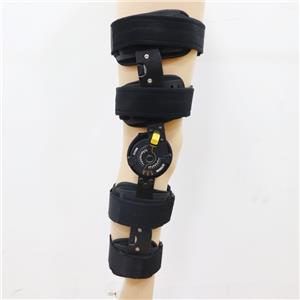
Xiamen Huakang Orthopedic manufactures tall and short walker boots in both standard and pneumatic configurations, under MDR CE, FDA and ISO 13485. Browse our Walker Boot range, or compare with our Ankle Foot Orthosis and Knee Brace categories. Send your target channel, volume and certification requirement to sales6@reabletrading.net and we will quote a configuration that matches it.